Mārama
Domestic violence, violence and content that may disturb Rated on: 05 February 2026
Marama
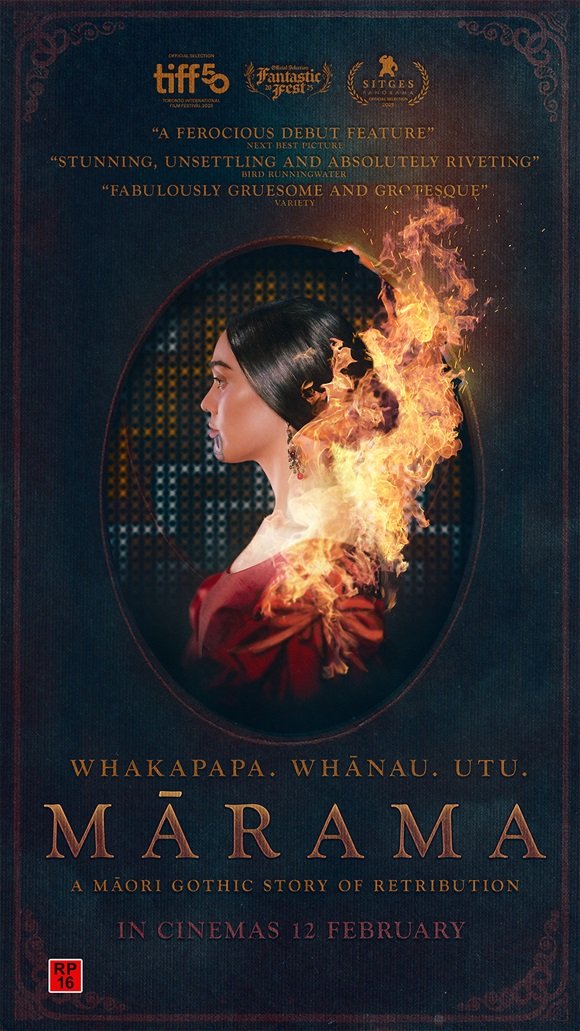
What’s it about?
In 1859 Victorian England, a young Māori woman fights to keep her identity by trying to find out what happened to her missing parents.
Mārama is a gothic revenge horror exploring themes of colonisation. While fictional, its portrayal of violence and historical harm carries emotional weight and may be confronting for some viewers.
The facts
- Directed by Taratoa Stappard
- Stars Ariāna Osborne, Toby Stephens, Umi Myers, Errol Shand, Jordan Mooney
- Māori and English languages
- Runtime: 89 minutes
- Premiered at the Toronto International Film Festival 2025
Why did it get this rating?
This film was classified by Te Mana Whakaatu, Classification Office. You can find out more about classification process and ratings here.
The Office considers that there is value in allowing young people to engage with this film given its historical, cultural and social merit. An RP classification allows young people to view the film if accompanied by a parent or guardian in order to mitigate potential harms. If a young person is 16 or older they don’t need to be accompanied by a guardian.
Domestic violence and sexual violence
There are several scenes involving domestic violence and sexual violence that may be upsetting for some viewers. This includes:
- A man violently attacks his partner’s mother, resulting in her death. He then assaults his partner during a sustained and intense scene of domestic violence.
- In another sequence, a confrontation between a man and a woman escalates into a brutal fight, with behaviour that strongly implies sexual violence before the man is killed.
- Sexual violence is also implied in the scene where a woman kills her baby immediately after birth because the baby’s father is also her father.
Violence
Violence is frequent, and confronting, particularly scenes depicting violence by English men against wāhine Māori and tamariki. The violence includes beheadings, gun violence and razors, and at times the violence is bloody. The strongest scenes include:
- In a drawn-out scene a character is stabbed, then beheaded below screen accompanied by realistic sound effects. The scene is dimly lit but the gore and wounds are clear.
- A character is shot in the head leaving blood detail on the body and the wall.
- A character is killed in a bath using a cutthroat razor. The act of killing is not shown but the body is seen from above with blood in the water.
Content that may disturb
A character experiences brief supernatural visions of violent acts repeated during the narrative including seeing herself:
- screaming with a blood-covered face
- on a beach with her throat cut but alive and in no pain
- giving birth to and killing her baby.
There are startling brief shots of the face of a murdered woman, a man being shot in the chest, and a dead whale’s eye being covered in blood. There are close images of the decapitated heads of three women.
Content that may offend
The film includes mockery of te reo and tikanga Māori, and depictions involving the desecration of tapu.
Helplines:
The domestic violence and sexual violence could be upsetting for some viewers, especially for those who have been affected in some way. If you are struggling with what you have seen on-screen please reach out for help. If you or someone you know needs to talk:
Further information
Recent featured decisions

Sexual material, sexual violence & offensive language
After twenty years spent “chillin’, tokin’ and bonin’”, Ali G is shocked to discover that his long-term girlfriend, Julie, is 8 months pregnant. Faced with an extra mouth to feed, he heads to America to reclaim his former glory… but soon encounters adversaries who will ultimately threaten his and his child’s very existence.
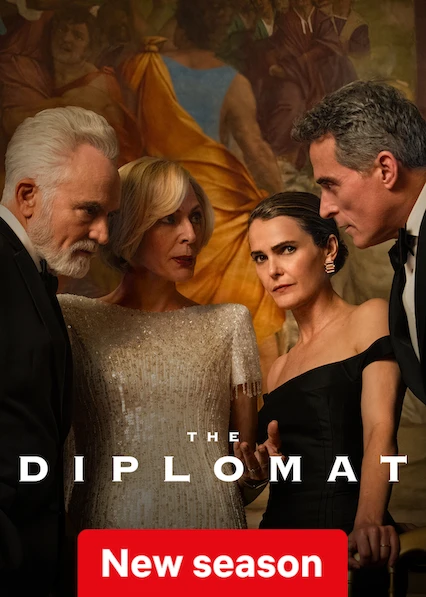
The Diplomat, Season 4
Season 4
Offensive language and violence
Ambassador and Second Lady Kate Wyler works desperately behind the scenes to ensure peace between major nations – and her marriage – in the fourth season of the acclaimed drama.