Can I watch Louis Theroux: Inside the Manosphere with my child?

Rebecca on March 20, 2026
A parent’s guide to conversations about online misogyny
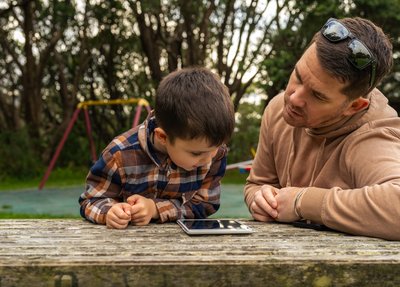
Louis Theroux dives into the world of online misogyny in his latest documentary for Netflix, Louis Theroux: Inside the Manosphere. You may be tempted to watch it as a family, especially if you have young people in your whānau.
Misogyny and the manosphere are topics that are complex and can be hard to tackle. Misogyny refers to hatred, contempt, dislike or distrust for women and girls based on their gender, and a belief that women and girls are inherently inferior to men and boys.
The Radicalisation Awareness Network defines the manosphere as "a collection of anti-feminist, largely online communities engaged in varying levels of misogyny and, on occasion, targeted violence". In his documentary, Theroux speaks to influencers in the manosphere about the views they openly share on social media. Non-fiction films and tv series which show real world people and situations provide an opportunity for conversations with the people close to us about their experiences in daily life.
It’s a topic that we see in our line of work. In 2024 we released the report Online Misogyny and Violent Extremism, in 2025 we released the report Content that Crosses the Line: Conversations with young people about extremely harmful content online, and this year we released a survey of New Zealanders’ experiences of extreme or illegal content online.
From our work, engagement and conversations with young people we know that young people want to be having conversations with the trusted adults in their lives.
We have developed guides on how to talk about the hard stuff, and have included a link to conversation starters we developed as part of our mahi. We also highlight the most impactful content in the documentary so you can make the right viewing choice for your whānau.
Please note that there may be spoilers for the documentary in this article.
In this blog
How is misogyny addressed in the documentary?
Is there graphic content in the documentary?
What are the most uncomfortable parts?
Conversation starters: How to talk to your child about harmful content online
If you’re concerned about your young person or someone you know
How is misogyny addressed in the documentary?
The film explores the online “manosphere”, where misogynistic attitudes are often promoted.
Through interviews and clips from social media, men express views about women being subordinate or lesser than men or to be treated as objects. One man discusses “one-sided monogamy”, claiming his partner packs condoms for him when he travels.
Other scenes include a man boasting about having sex with thousands of women.
One individual claims to run a business that manages creators on OnlyFans while also saying he finds the platform “disgusting”.
Is there graphic content in the documentary?
Sexual content appears in social media footage and screenshots shown in the documentary. This includes references to sex acts, non-consensual sex and images of women in lingerie from platforms such as OnlyFans. There is no full nudity.
Is there strong language?
Offensive language includes words such as “f**k” and “bullsh*t”.
Some individuals in the documentary express homophobic, antisemitic, and other discriminatory views.
Examples include statements that someone would disown a child for being gay, and online clips where hateful comments are directed at LGBTQ+ people.
There are antisemitic remarks, including claims that Jewish people control the world or are responsible for social change.
What are the most uncomfortable parts?
The film includes blurred livestream footage from a so-called “predator sting”, where a man accused of being a paedophile is confronted. Sounds of the man being punched and kicked can be heard.
Conversation starters: How to talk to your child about harmful content online
We always advise that these conversations should be shaped by age, maturity and understanding, rather than one hard rule about the “right age”.
As part of our work with young people, and in consultation with clinical psychologist Dougal Sutherland from Umbrella Wellbeing, we have developed conversation starters for different ages and stages.
Basic content safety conversations can start with what to do when something feels off. Whānau can start these early, make them regular, and keep things age-appropriate. Some examples of conversation starters with your child:
- “What is the difference between a joke and something unkind?”
- “What would you do if a video made you uncomfortable or confused?”
- “Have you ever seen videos where people are mean about girls or boys online or in a game?”
- “What do you think respectful behaviour online looks like?”
- “Why do you think some people say cruel things online that they might not say in person?”
- “What makes someone feel safe to talk to online?”
- “If a video made someone feel bad or confused, what could they do?”
If you’re concerned about your young person or someone you know
If you’re concerned after talking with your young person, or watching the documentary, there is help available.
If you’re unsure who to contact, a good starting point is Netsafe for online harm, or 1737 for mental health support or Youthline for rangatahi support. All three can guide you to the most appropriate service.
Final thoughts
The manosphere is not just something that lives in documentaries like this. Its ideas can show up in memes, podcasts, gaming chats, short videos, and influencer content young people come across every day.
Young people have told us that it’s not so important that you watch challenging content together, but whether they feel able to talk with you about the things they are seeing online or on screen. Honest, low-pressure conversations can go a long way in helping young people question harmful messages and build critical thinking.
Further reading
- Louis Theroux: Inside the Manosphere (featured decision)
- Illegal and harmful content: resources for supporting young people (resource)
- Online Misogyny and Violent Extremism – Summary Report
- Online Misogyny and Violent Extremism: Understanding the Landscape
- Adolescence (content breakdown)
- Misogyny in our midst: Adolescence highlights what our research shows
- Helplines and support services
Subscribe to our blog
Stay up to date with the Classification Office blog.